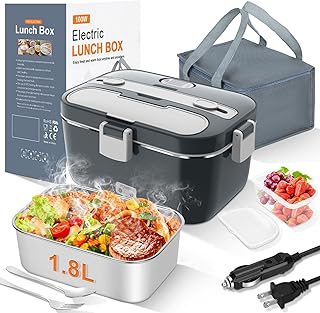
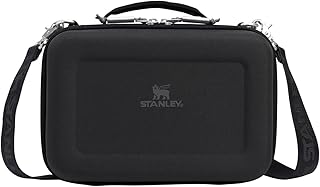
Rigid lunch boxes give delicate food more protection from crushing, soft-sided formats can leave more room around separate containers, and electrically heated versions add a way to warm a meal where suitable power is available. A lunch bag generally carries food containers, so check whether you are buying an outer carrier or a box with a food-contact interior. Start with the meal you actually pack, including snacks and separate pots.
Capacity is useful when it reflects that whole lunch, not just the main dish. Among the 14 products that list capacity, most fall between 14 and 251 fl oz, and 44 fl oz is typical. A large stated volume may still be awkward for an uncut sandwich or a tall yogurt pot, so compare the usable internal dimensions with your usual food and containers. For divided or stacked designs, look at the size of each section and whether the stated capacity combines them. Leave space for any ice pack you intend to carry inside; a box filled to the lid leaves no room for it.
Temperature control depends on how long lunch waits and what facilities you have. For perishable food eaten cold, look for room to use cold packs as directed; insulation alone is not a source of cooling. With an electrically heated box, confirm the required power supply, whether the necessary adapter is included, and the maker’s heating guidance for your meal’s quantity and starting temperature. For soups and dressings, look for an explicit leak-resistance statement covering the outer lid and any internal dividers, since food can migrate between sections even when nothing escapes the box. If the eater has difficulty with stiff catches, look for a clear demonstration of how the loaded box opens.
Before planning to reheat food in the container, confirm that microwave use is permitted and identify which lids, inserts or other parts must be removed. Cleaning instructions should distinguish the food-contact container, lid, seals and any electrical housing, with dishwasher permission stated for each washable part. Removable seals can make trapped food easier to reach, but inspect how they come out and refit. For designs that depend on dedicated pots, trays or seals, confirm what is supplied and whether replacements are available separately.
How we list products: every listing here has a recorded price, a minimum customer rating and enough ratings or monthly sales. Generic and unbranded listings are left out; every real brand stays, including brands sold only on Amazon. Products are ordered by monthly searches for their brand and model on every page.Editorial policy


 Best Overall