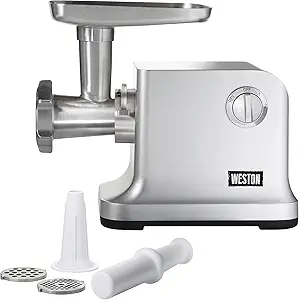
Hand-cranked meat grinders require sustained effort through a batch, standalone electric grinders handle the turning, and attachments let a compatible kitchen machine do the work. Start with the format your kitchen can accommodate: for an attachment, confirm the exact host-machine compatibility; for a manual grinder, check the mounting method, worktop thickness for clamp-mounted models and handle clearance for every hand-cranked model.
Compare the tray or hopper’s stated holding capacity with your usual batch and your willingness to refill it, first confirming that the listing describes how much meat it holds rather than how much it processes over time. Among the 14 products that list capacity, most fall between 5.5 and 550 pounds, and 14 pounds is typical. This range alone cannot establish how much meat a grinder holds, because holding capacity and processing rate are different measurements. A smaller holding area means adding prepared meat in more stages. For powered grinders, weigh the permitted running time and required cooling pauses against your usual batch; even a large tray may need to be emptied through several operating cycles. Advertised processing rates depend on meat temperature, trimming, piece size and the grinding plate used, so compare the stated preparation conditions with your intended use.
Grinding plates determine the textures available: coarse holes suit a chunky mixture, while finer holes produce a smoother mince. If your recipe calls for another pass through the grinder, read the manual’s instructions for chilling the mince and selecting a plate for that second pass. For cuts with substantial connective tissue, look at the trimming requirements and whether a reverse function can help release a blockage; the meat still needs the specified preparation. For sausage making, establish whether stuffing is a supported use and whether the necessary tubes and stuffing components are supplied or sold separately.
Grinding bones requires explicit permission in the manual for whichever format you buy. The Stainless Steel or Steel material filter may describe different parts, so identify the materials of the tray, grinding head, auger, blade and plates individually. Cleaning instructions should say which removable components permit dishwasher washing and which require hand washing, immediate drying or protective oiling. Check that replacement blades and plates are available for the exact grinder fitting.
How we list products: every listing here has a recorded price, a minimum customer rating and enough ratings or monthly sales. Generic and unbranded listings are left out; every real brand stays, including brands sold only on Amazon. Products are ordered by monthly searches for their brand and model on every page.Editorial policy