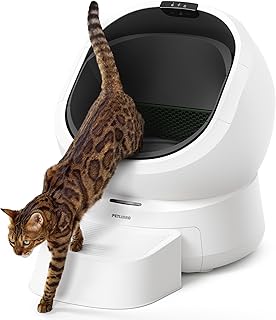
Self-cleaning litter boxes come in raking, rotating and washing designs. Raking and rotating systems separate waste into a collection compartment that needs emptying; washing systems rinse reusable granules and send waste to a drain, changing both installation and disposal routines. Start with whether your cat can comfortably enter and use the box, since an automated mechanism offers little help if the entrance or toilet area discourages use.
Compare the usable toilet area and entrance dimensions with your cat’s current box, rather than judging roominess from the enclosure’s outside measurements. A high entry can be difficult for a cat with limited mobility, while an enclosed chamber may feel restrictive to a cat accustomed to an open tray. Read the manufacturer’s age and weight restrictions before choosing for a kitten or small cat. The manual should explain how the mechanism detects a cat, delays cleaning after departure and stops if a cat returns during a cycle. In a home with several cats, those requirements need to suit every cat that can access it.
Litter compatibility is the next constraint: some mechanisms need clumping litter, others use crystals, and washing designs may require specified reusable granules. If keeping your cat’s familiar litter matters, compare its composition and grain size with the mechanism’s requirements before committing. For a washing design, establish whether the intended location has the water supply and drain arrangement required by the manual, including any restrictions on hose routing. For a box near a bedroom, look for a way to schedule or pause cleaning cycles, and establish whether that control works on the box itself or requires an app.
Before buying, read the cleaning instructions for the rake or drum, waste compartment and any washable trays. Removable parts can make stuck waste easier to reach, but confirm which can be rinsed and which must stay dry because they contain electrical components. Material descriptions such as Plastic or Acrylonitrile Butadiene Styrene (ABS) need a named part and its care instructions to be useful. Establish whether the system requires proprietary trays, liners, cleaning solution or odor filters, how their replacement schedule changes with use, and whether the initial supplies are included or sold separately.
How we list products: every listing here has a recorded price, a minimum customer rating and enough ratings or monthly sales. Generic and unbranded listings are left out; every real brand stays, including brands sold only on Amazon. Products are ordered by monthly searches for their brand and model on every page.Editorial policy


 Best Overall


