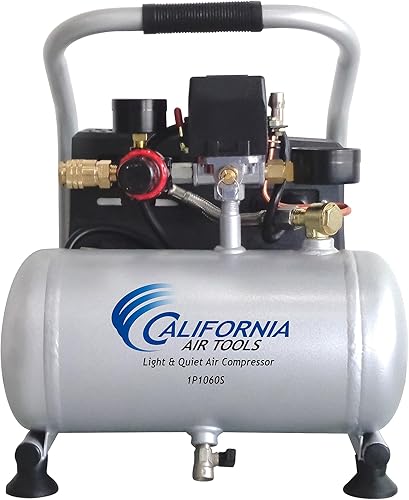
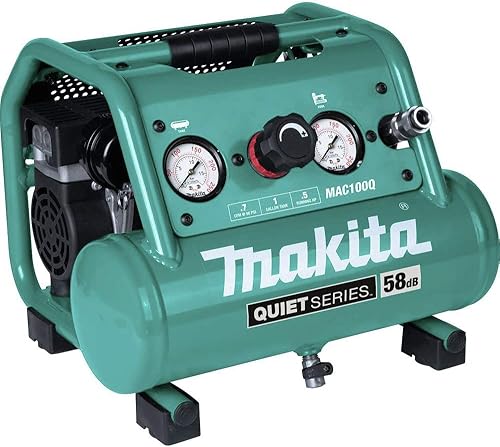
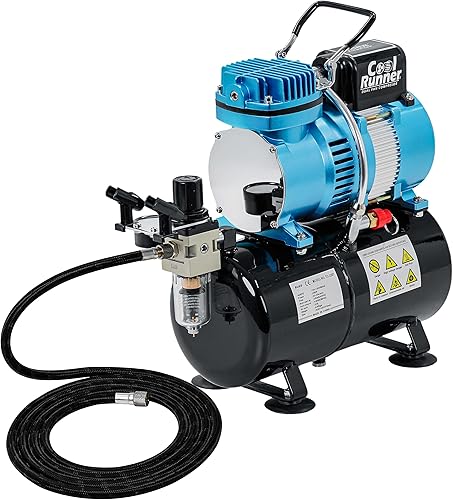
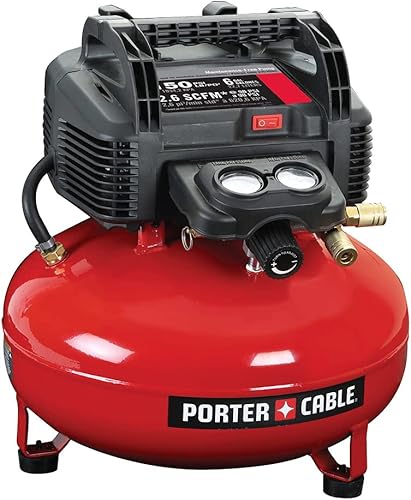
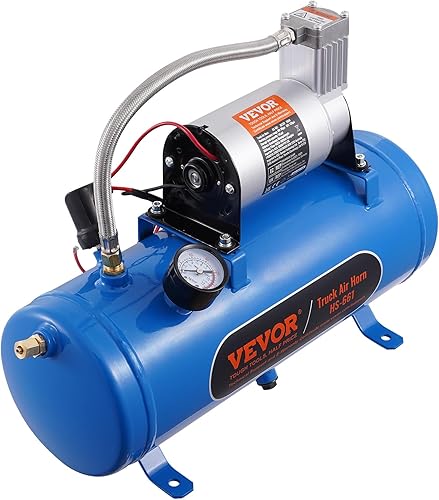
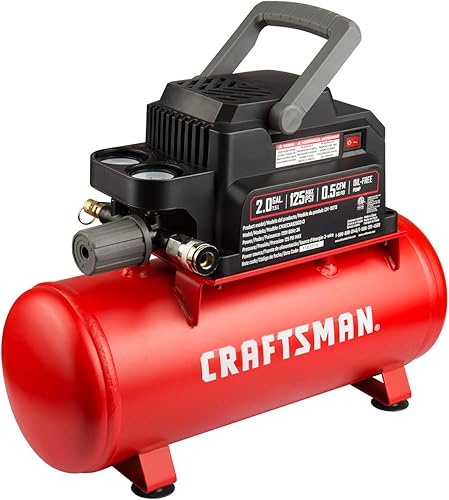
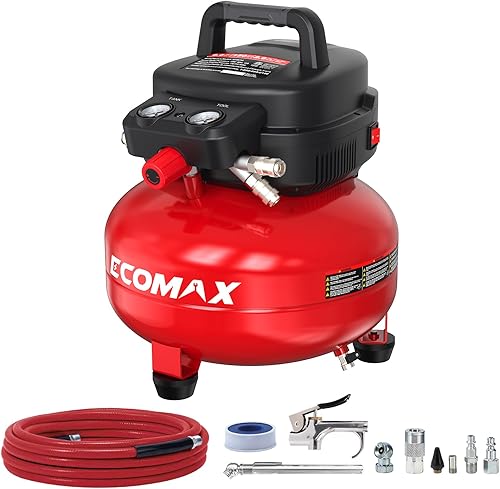
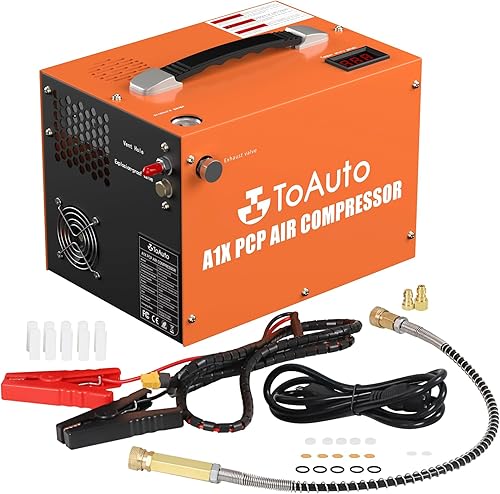
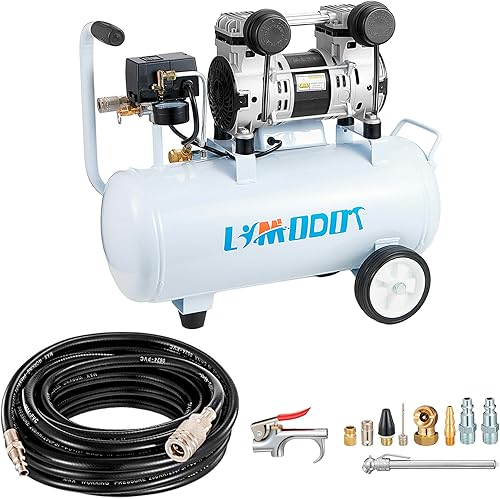
Air compressors come in compact portable tank designs, larger workshop units, and specialized high-pressure filling units. Portable designs are easier to move between jobs, workshop units can offer more stored air, and high-pressure filling equipment needs explicit compatibility with the vessel being filled. Establish the intended task before deciding how much tank storage you need. A tire inflator may suit tire maintenance but should not be assumed to run air tools; a separate air compressor tank stores compressed air and needs a suitable compressor to supply it.
For a tank-equipped compressor, choose storage around whether your work involves brief bursts or sustained operation. Among the 34 products that list tank volume, most fall between 0.3 and 11 gallons, and 3.8 gallons is typical. A larger tank holds more compressed air, providing a reserve before pressure falls enough to trigger the pump, but it cannot compensate indefinitely when a tool consumes air faster than the pump replenishes it. Occasional fastening and repeated blowing place different demands on that reserve. Compare the compressor maker’s guidance for your intended tool and working pattern against the tool’s requirements. If you must carry the compressor up stairs or lift it into a vehicle, compare listed weight and handle placement against what you can comfortably lift; tank volume does not tell you either.
Tool compatibility depends on working pressure, so compare the tool’s required pressure with the compressor’s regulated operating range instead of relying on maximum pressure alone. For repeated work, read the duty-cycle guidance: some pumps require cooling pauses, which can interrupt a session even when tank storage seems adequate. Advertised performance depends on operating pressure and test conditions, so compare specifications stated under equivalent conditions. Noise also matters in an attached garage or enclosed workshop; compare sound figures measured at the same distance and under similar operating conditions.
Before buying, confirm the required electrical supply and startup requirements, or the permitted operating location for an engine-driven unit. Fuel-powered compressors need outdoor operation away from openings because exhaust can enter buildings. Hose fittings and couplers must match your tools, and the listing should state whether a hose, regulator, and required adapters are supplied or sold separately. For tank models, inspect drain access because accumulated moisture needs regular removal. Oil-lubricated pumps require the specified oil and maintenance; for either pump design, confirm access to replacement intake filters and other service parts identified in the manual.
How we list products: every listing here has a recorded price, a minimum customer rating and enough ratings or monthly sales. Generic and unbranded listings are left out; every real brand stays, including brands sold only on Amazon. Products are ordered by monthly searches for their brand and model on every page.Editorial policy


 Best Overall