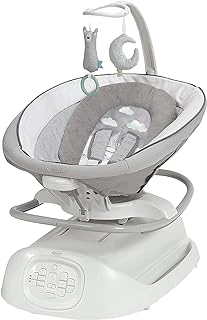
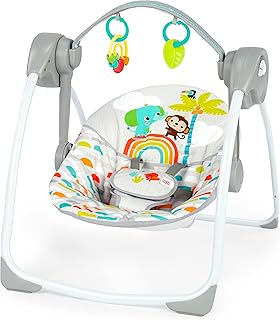
Baby swings rock or glide a baby with a motor, and on this page they range from full size swings with a frame and seat to compact portable swings and smart swings controlled by an app. The first decision is the space you have, because full size swings take up a lot of floor space, while compact and portable models fit apartments and travel.
Motion and settings are the next questions. Swings move side to side, front to back or in figure of eight patterns, and babies often prefer one motion over another, so models with several directions or speeds help. Music, nature sounds and mobiles add soothing options, and timers turn the swing off after a set time.
Weight limit and age come next. Among the 10 products that list maximum weight recommendation, most fall between 20 and 28 pounds, and 20 pounds is typical. Swings are for young babies, and most must stop being used once the baby reaches the weight limit or can sit up or climb. Check the seat recline, since newborns need a deeper recline.
Power and noise matter in daily use. Plug in swings run without batteries, while battery models are portable but use batteries quickly. A quiet motor is less likely to wake a dozing baby.
Before buying, check the weight limit, the seat recline, the motions and speeds, the power source, the footprint and whether the seat cover is machine washable. Use the harness every time, place the swing on the floor away from furniture and cords, and move a sleeping baby to a flat, firm sleep surface, since swings are not safe for unsupervised sleep. Swings that plug in and also run on batteries give flexibility, and a seat that lifts off to become a portable rocker is handy around the house.
How we list products: every listing here has a recorded price, a minimum customer rating and enough ratings or monthly sales. Generic and unbranded listings are left out; every real brand stays, including brands sold only on Amazon. Products are ordered by monthly searches for their brand and model on every page.Editorial policy


 Best Overall