

 Best Overall
Solder
Kester 44 63/37 Rosin Solder Wire 1 oz Tube
A small leaded rosin-core solder tube for electronics work, repacked by a reseller. The listing restricts it to industrial use by experienced technicians and carries fume warnings.
As an Amazon Associate I earn from qualifying purchases. ProductDome earns a commission when you buy through links on this page.
Best OverallA small leaded rosin-core solder tube for electronics work, repacked by a reseller. The listing restricts it to industrial use by experienced technicians and carries fume warnings.

A fine-gauge, one-pound spool of rosin-core solder with a long-running activated flux made for production soldering. The listing does not say whether the residue needs cleaning.

A leaded rosin-core solder wire for professional use, with an activated flux and a defined tin-lead alloy. The weight field is wrong, so rely on the title for the quantity.

Rosin-core solder from Kester with a thin wire gauge. The page is brief, with no melting range, flux class or cleaning guidance.

A leaded activated rosin core solder with fast-spreading flux for general work on medium to large wires and components. It contains lead and halogen, so ventilation and handwashing matter.

A half-ounce tube of leaded rosin-core solder for fine-pitch electronics, PCB assembly, repair and rework. The listing carries strict warnings, and its weight and diameter fields conflict with the title.

A thinner leaded rosin core solder for electronics hobbyists and repair work who want Kester's activated flux. It is leaded, so it does not suit lead-free builds.

A rosin-core solder roll with an activated flux made for fast wetting on production soldering. Alloy ratio and melting range are not given, so check them against your joint before ordering.

A Kester wire solder listed mostly by product code, weighing just under a pound. The listing gives no alloy statement, diameter or flux details in words.

A small pack of fine rosin core solder for electronics repair and hobby work. The listing does not name the alloy metals.

A fine diameter rosin core solder for electronics, sold in a small quantity of three short lengths. The listing does not name the alloy metals.

A small repackaged tube of Kester 44 cored solder for electronics hobby work. It is sold in a tube, not on the factory spool, so it is a convenience size.

A leaded rosin-core solder wire in a thick gauge, with a stated melting point, flux percentage and classification. The shipping weight in the spec table does not match the pound size in the description.

A one-pound roll of no-clean flux-cored solder for jobs where a wash afterward is unwelcome. The listing gives no melting range or flux percentage.

A complete copper plumbing kit with flux, brush and abrasive cloth in the package. The solder quantity is small, so bigger jobs need more wire.

A lead-free plumbing solder for copper water lines, with a wide melting range that gives time to work each joint. It needs separate flux and will not bond aluminum.
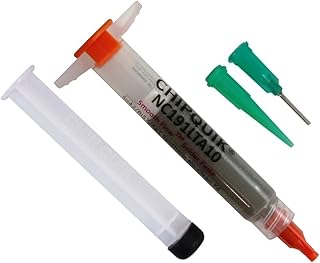
A lead-free low temperature solder paste in a small syringe, with a synthetic no-clean flux. It needs cold storage, and the low melting alloy should be checked against the application.

A one-pound coil of lead-free plumbing solder for copper joints and drinking water lines. One spec field says lead while the description says lead-free, so check the package.

A no-clean leaded solder paste in a syringe, listed alongside a tacky flux paste. The listing gives no storage, reflow or shelf-life information, so check those with the maker.

A lead-free, no-clean K100LD wire solder at a thin diameter, made in the United States. The listing gives no flux percentage or melting range.

A leaded no-clean solder paste in a small syringe, with fine powder and a flow-focused flux. It needs refrigerated storage and a warm-up before use, and it contains lead.

A capable kit for repairing aluminum and zinc die-cast parts with a torch or iron. It does not work on magnesium, and the flux residue needs scrubbing off.

A small quantity of plumbing solder that meets drinking water requirements and works with a propane torch and good flux. Alloy makeup and wire diameter are not given.

A no-clean leaded solder wire for electronics work where cleaning boards afterward is not wanted. It is leaded, so it is not for lead-free assembly.
As an Amazon Associate I earn from qualifying purchases.
Kester, Chip Quik, Oatey, Kester443-845, Harris lead this category among the 5 brands that passed our curation checks.
A listing appears only when it has a recorded price, a minimum customer rating, and enough ratings or monthly sales. Generic and unbranded listings are left out, while every real brand stays, including brands sold only on Amazon. The ones that pass are ordered by how many people search for that brand and model each month; review counts only break ties.
Solder comes as wire for feeding into a heated joint, paste for placing solder before reflow heating, and solid bars or sticks for equipment or jobs that accept those forms. Start with how you will apply heat and deliver solder: hand soldering individual connections calls for different handling from heating an assembly with paste already placed on its pads. Soldering Flux is a separate preparation that helps solder wet the joint; it supplies no filler metal and cannot replace solder.
For hand feeding, choose wire diameter against the size of the connections: fine wire makes small additions easier to control on closely spaced pads, while thicker wire reduces repeated feeding on larger joints. For paste, match the dispensing method to your work, such as a syringe for individual deposits or a stencil for repeated pad patterns, and confirm whether the required dispensing accessories are supplied or sold separately. Package weight matters if you carry solder between jobs. Among the 28 products that list item weight, most fall between 0.1 and 1.1 pounds, and 1 pounds is typical.. Use that weight to judge the load in your kit; the spool’s dimensions and centre opening need a separate comparison with your holder.
Choose the alloy by the metals being joined and the heating process your equipment supports. Compare its stated melting behaviour and recommended working temperature with your tool’s guidance for that task; a large connection can draw heat away differently from a small pad. Flux chemistry is another decisive choice: a product intended for plumbing can be unsuitable for electronic connections because its residue may be corrosive. For wire, establish whether it contains a flux core or needs separately applied flux, then match that flux to the joint materials and application.
Before buying, confirm that the listing identifies an actual solder suitable for your intended joint; a pipe bonding adhesive uses a different joining process. Material filter values such as lead, metal and copper are insufficient for choosing an alloy, so look for its full composition. For ownership, read the flux residue removal instructions and confirm which cleaning agents the assembly tolerates. Paste also needs explicit storage conditions and a usable shelf life after opening; confirm those requirements before choosing a package.
How we list products: every listing here has a recorded price, a minimum customer rating and enough ratings or monthly sales. Generic and unbranded listings are left out; every real brand stays, including brands sold only on Amazon. Products are ordered by monthly searches for their brand and model on every page.Editorial policy