As an Amazon Associate I earn from qualifying purchases. ProductDome earns a commission when you buy through links on this page.
Best Overall
Camping Water Filters
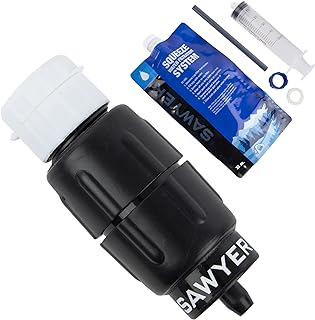
Sawyer SP129 Squeeze Water Filtration System
A very light squeeze filter that turns lake, river or stream water into drinking water. The listing is inconsistent about pouch count and one bacteria figure, so read the exact kit contents.
A hand-operated bottle purifier that names viruses, protozoa and bacteria on its removal list, for hiking and travel. The listing gives no cartridge capacity, so the replacement schedule is the thing to check.
A collapsible bottle with a hollow-fiber filter that the title says removes bacteria, protozoa and sediment. The included components list only the filter membrane, so check what ships with the bottle.
A very small hollow fiber filter that drinks straight from a pouch or a straw on the trail. Virus removal is not claimed, and a few listing entries look mislabeled.
A fast squeeze filter that threads onto common bottles and reservoirs and cleans in the field without tools. The listing claims bacteria and protozoa removal only, so it does not replace virus or chemical treatment.
A pocket-sized squeeze filter for solo hikers who refill often along the trail. The small reservoir means more refills, and warranty details are not given.
Purification Method
Hollow fiber membrane
Maximum Flow Rate
3 liters per minute squeezed, 1.75 liters per minute gravity
Groups and emergency kits get a hand powered hollow fiber purifier with a fast stated flow rate. The listing does not say which contaminants it removes, so confirm that before relying on it abroad.
A hand pump water filter for backpacking, supplied with hoses, a bottle adapter and a carry bag. Contaminant removal claims are not stated in the listing, so check the maker's specs.
A jerrycan with a hand pump and tap that filters water as it dispenses, sized for a vehicle or base camp. It is heavy when full and the listing omits filter life and what it removes, so check those first.
A filter bottle for travel that removes bacteria, parasites and microplastics according to the title, with a carbon block stage for taste. The listing limits water quality to a maximum TDS level.
An insulated steel bottle with a built-in carbon and ultrafiltration filter for travel and daily use. It does not treat viruses or dissolved salts, and the listing gives no flow rate or filter life.
A press-style purifier bottle that treats a bottle of water in seconds and removes viruses, bacteria and protozoan cysts. The listing gives no filter life, weight or dimensions.
A no-pump gravity filter for groups that turns a hung reservoir of creek water into a full bag of clean water quickly. It needs a branch or hook to hang from and does not remove viruses according to the listing.
A compact, crushable water bag with filter for hikers who want extra capacity without a rigid jug. Virus removal is not covered, and parts of the spec sheet are clearly wrong.
A light, crushable reservoir that doubles as a filter bag and an ice pack for backcountry camps. Virus removal is not listed, and the volume appears only in the product name.
A larger collapsible reservoir with a hollow fiber filter cap for group camps and emergency kits. Viruses are not covered, and keep water above freezing when filtering.
An ultralight personal filter straw for travel and day trips that removes bacteria, parasites and microplastics. It does not list virus or chemical removal.
A tiny squeeze filter with a long rated life that suits hiking, travel and emergency kits. It does not list virus or chemical removal, so treat questionable water sources accordingly.
A light, packable bottle and filter combo for hikers who drink straight from streams. Viruses are not on the removal list, so it is not a full purifier.
A rugged ceramic and carbon pump that also cleans up taste and odor, built for long trips and emergency kits. It pumps slower and weighs more than hollow fiber filters.
These 10 camping water filters are the most searched brands and models among the established products in this category (monthly searches for each brand and model); on a tie, the one with more owner ratings ranks first. Product data comes from public Amazon listings (updated 2 days ago). We do not test products ourselves.
What are the most popular camping water filters brands?
Katadyn, LifeStraw, Platypus, HydraPak, MSR lead this category among the 15 brands that passed our curation checks.
How does ProductDome pick these camping water filters?
A listing appears only when it has a recorded price, a minimum customer rating, and enough ratings or monthly sales. Generic and unbranded listings are left out, while every real brand stays, including brands sold only on Amazon. The ones that pass are ordered by how many people search for that brand and model each month; review counts only break ties.
About camping water filters
Camping water filters include direct-drinking, squeeze, pump and gravity systems. Start by deciding whether you need drinks along the trail or treated water to carry, share and cook with at camp; a system designed for drinking through a mouthpiece may be awkward for filling a cooking pot.
For a setup carried throughout the day, compare the weight of the complete kit you need, including collection containers, hoses and cleaning equipment. Among the 31 products that list item weight, most fall between 0.1 and 1.2 pounds, and 0.4 pounds is typical. A listed weight may exclude these accessories, so establish what it covers before comparing it with another setup. For shared camp supplies, compare how much handling each system requires for your expected water use: squeeze systems require squeezing a compatible pouch or bottle, pumps require manual operation, and gravity systems need a suitable position for the collection reservoir above the outlet. Decide whether that positioning requirement suits your campsites before choosing gravity filtration to reduce hands-on work.
Match treatment claims to your planned water sources before comparing flow. Many camping filters address bacteria and protozoa but do not remove viruses; if you need virus protection, look for an explicit claim that the filter or a water purifier provides that treatment. Where salt or chemical contamination is a concern, establish whether the system is intended for that source and addresses the specific contaminant. Source access also affects the choice: a collection bag that needs submerging can be difficult to fill from a shallow trickle, while a pump intake may reach water that is awkward to scoop. Compare advertised flow conditions with the clarity of your expected sources, since sediment buildup can slow filtration and increase pumping or squeezing effort.
Before buying, confirm the bottle threads, reservoir fittings or hose connections your setup requires. The container type filter values are Bottle and Bag,Bottle; check the listing for compatible containers and whether required containers and adapters are supplied or sold separately. For freezing conditions, read the instructions for protecting a wetted filter and handling suspected freeze damage. Cleaning requirements should identify any backflushing syringe or cleaning adapter you will need, including whether it is supplied or sold separately. For models with replaceable cartridges, confirm replacement cartridge availability. For every model, consult the manufacturer’s replacement criteria and distinguish any stated treatment lifespan from the amount a container holds.
How we list products: every listing here has a recorded price, a minimum customer rating and enough ratings or monthly sales. Generic and unbranded listings are left out; every real brand stays, including brands sold only on Amazon. Products are ordered by monthly searches for their brand and model on every page.Editorial policy
Cookie settings
We use necessary cookies to keep the site working. Page views are counted without cookies. With your permission, we also use functional and marketing cookies. Cookie Policy.


 Best Overall