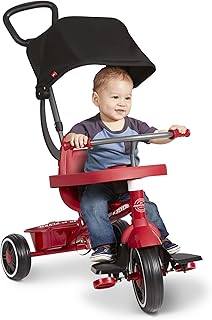
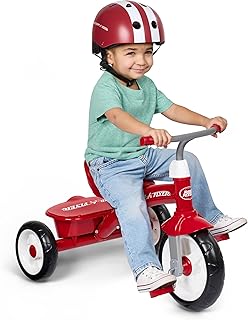
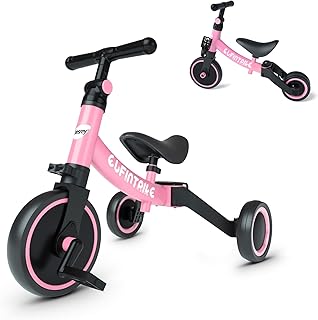
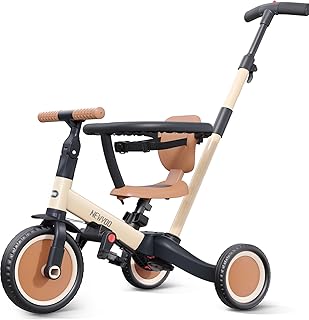
A convertible trike that starts as a parent-steered stroller and ends as a pedal tricycle for toddlers. The listing gives no wheel diameter or seat height, so check fit for taller kids near the upper age.
A grow-with-me trike that starts as a parent-steered ride and ends as a classic trike for a preschooler. The two stated weight limits differ slightly, so plan around the lower one.
A battery-powered three-wheel drifting trike for older kids with push-button throttle and a charger included. The charge time is long, and ride time is short.
A kid-powered Harley-Davidson styled trike for toddlers, with under-seat storage and no assembly. The listing says no warranty, so check the rider limits and the maker terms before buying.
A kids caster trike that spins and drifts on two inclined rear wheels. The listing conflicts on frame material and wheel count, so read the description rather than the spec fields.
Fisher-Price Harley-Davidson Lights and Sounds Trike
A kid-powered Harley-Davidson-themed tricycle with lights, sounds and a secret compartment for preschoolers. Assembly is required, and the listing carries no warranty.
A four-stage tricycle that starts as a parent-pushed seat and ends as a pedal trike for a toddler. The listing gives two different ages for the last stage.
A parent-steerable toddler tricycle with a push handle, seatbelt and storage. The wheel size is listed as eight inches and the age band is narrow, so the trike is for a short riding window.
A convertible ride-on that goes from a parent-pushed stroller seat to a trike a child steers alone. The age entries disagree slightly, and assembly is required.
A grow-with-me trike that changes from a parent-steered stroller to a classic trike. Assembly is required, and the age range fields disagree on the starting age.
A classic steel-frame tricycle for toddlers, with an adjustable seat, bell and rear step. Assembly is required, and the weight limit is low enough that growth will end its use.
A convertible toddler trike that becomes a balance bike when the pedals come off. The listing names only the frame as included and does not describe the five modes.
A five mode toddler trike that converts from a parent-push model to a balance bike and a pedal trike. Only hardware and tools are listed in the box, and assembly is required.
A convertible toddler trike that folds, with a parent push handle that hands over to pedals or balance riding as the child grows. Assembly is required, and the listing says little about care or the folded size.
A toddler trike that starts with a parent push handle and a safety bar, then converts toward a balance bike. The weight limit is low and assembly is required, so it covers a short window.
Reviewers across multiple households describe easy assembly and a design that keeps pace with a growing child, making it a reasonable pick if you are ready to start younger toddlers in balance mode.
Weight Capacity Maximum
55 pounds
Size
Large
Manufacturer Minimum Age MONTHS
24.00
Manufacturer Maximum Age MONTHS
60
Tricycles
YGJT LM80 3 in 1 Folding Toddler Tricycle
Given the same design and owner feedback as the rest of the line, expect an easy setup and a bike that keeps pace with a child's growth, with pedals that are a stretch for the youngest toddlers.
These 9 tricycles are the most searched brands and models among the established products in this category (monthly searches for each brand and model); on a tie, the one with more owner ratings ranks first. Product data comes from public Amazon listings (updated 2 days ago). We do not test products ourselves.
Radio Flyer, Kriddo, Italtrike, Jmmd, Razor lead this category among the 50 brands that passed our curation checks.
How does ProductDome pick these tricycles?
A listing appears only when it has a recorded price, a minimum customer rating, and enough ratings or monthly sales. Generic and unbranded listings are left out, while every real brand stays, including brands sold only on Amazon. The ones that pass are ordered by how many people search for that brand and model each month; review counts only break ties.
About tricycles
Tricycles come as child-pedaled models, parent-push designs and convertible versions with removable support parts. The practical difference is who can propel and steer during a ride; a push handle may provide steering control or simply let an adult push. Start with the rider’s physical fit and readiness for the intended riding mode, before choosing features intended for later growth.
For independent pedaling, the child needs to reach the pedals throughout their rotation and hold the handlebars comfortably while seated. Toddler and Kid labels cannot resolve that fit: use the stated rider measurements, seat adjustment and maximum rider weight to judge suitability. Among the 42 products that list weight capacity maximum, most fall between 30 and 119 pounds, and 55 pounds is typical. A higher weight limit does not mean the pedals will suit a smaller child. On convertible designs, establish which configurations the manufacturer permits for the child’s current stage; a harness or surrounding support bar is not permission to use a mode before the child meets its requirements.
Next, decide how much adult control your usual rides require. For parent-pushed outings, look for an explanation of whether the handle turns the front wheel and whether the child’s handlebars can override it. Pedal behavior matters too: find out whether the pedals keep turning when an adult pushes and whether suitable footrests are available for that mode. For child-pedaled riding, compare the tire construction and intended riding surfaces with your route. Some tires need inflation; solid tires avoid that upkeep. Check whether the manufacturer recommends the model for your intended surface, especially uneven paving. Follow the manufacturer’s restrictions on slopes and instructions for stopping, since braking arrangements vary.
Before buying, compare the assembled width with your narrowest doorway or storage entrance; Large and Medium labels are no substitute for dimensions. For a folding design, use its folded measurements to assess transport space. An assembly label of Yes or No leaves other questions open: inspect the instructions for handlebar, wheel and pedal attachment, required tools and any setup before riding. Carbon Steel or Plastic may describe particular components, so identify the frame, wheels and seat separately in the listing. Establish whether any needed push handle, footrests or support parts are supplied or sold separately, and whether replacement pedals and wheels are available.
How we list products: every listing here has a recorded price, a minimum customer rating and enough ratings or monthly sales. Generic and unbranded listings are left out; every real brand stays, including brands sold only on Amazon. Products are ordered by monthly searches for their brand and model on every page.Editorial policy
Cookie settings
We use necessary cookies to keep the site working. Page views are counted without cookies. With your permission, we also use functional and marketing cookies. Cookie Policy.


 Best Overall