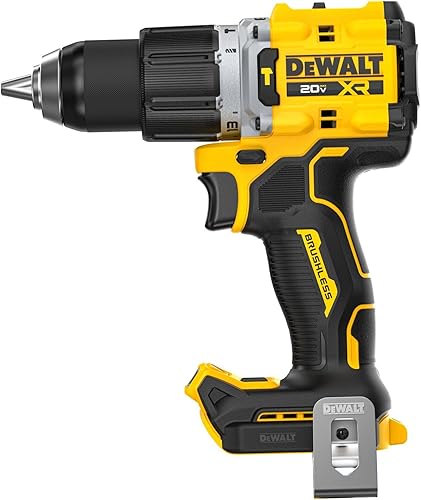
Hammer drills add a percussive action to a normal drill so they can bore into brick, block and concrete as well as wood and metal. They are different from rotary hammers, which hit much harder and suit larger holes in concrete, and from impact drivers, which drive screws. The first decision is how much masonry you drill, because a hammer drill is ideal for anchors and wall plugs, while regular work in concrete calls for a rotary hammer.
Power source is the next choice. Cordless hammer drills are the most popular, and the battery platform you already own decides the brand for many buyers. Corded drills offer steady power for long sessions without battery swaps. Among the 5 products that list amperage, most fall between 1.6 and 5 amps, and 5 amps is typical. A brushless motor runs cooler and gets more work from each charge.
Chuck and controls matter too. A metal keyless chuck holds masonry bits firmly, a side handle gives control when the bit binds, and a clutch protects screws when driving. A mode selector switches between drilling, hammer drilling and driving.
Before buying, check whether a battery and charger are included or sold separately, the chuck size, the speed range, the weight and the length of the tool. Use carbide tipped masonry bits, wear eye and hearing protection, and check for buried cables and pipes before drilling into walls.
How we list products: every listing here has a recorded price, a minimum customer rating and enough ratings or monthly sales. Generic and unbranded listings are left out; every real brand stays, including brands sold only on Amazon. Products are ordered by monthly searches for their brand and model on every page.Editorial policy


 Best Overall