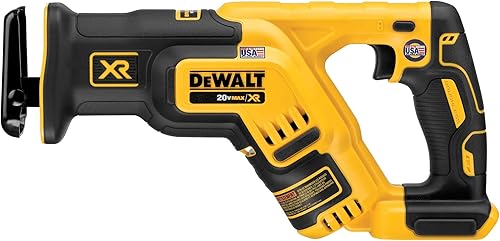
Reciprocating saws cut with a straight blade moving back and forth, and they are demolition and rough cutting tools for cutting through walls, pipes, nails, branches and old framing. They are not built for fine cuts; a jigsaw or circular saw is the better choice for clean lines. The first decision is how much heavy cutting you do, because compact one handed saws suit occasional pruning and plumbing, while full size saws cut faster through thick material.
Power and stroke are the next questions. Longer stroke length and higher stroke rate remove material faster, and an orbital action speeds up cuts in wood at the cost of a rougher edge. Among the 5 products that list item weight, most fall between 2.1 and 7.9 pounds, and 5.4 pounds is typical. Lighter saws are easier to use overhead and in tight spaces. Cordless saws dominate this category, and the battery platform you already own often decides the brand.
Vibration and blade changes matter in use. Anti vibration features make long demolition jobs less tiring, a tool free blade clamp makes changes quick, and an adjustable shoe helps use more of the blade's teeth.
Before buying, check the stroke length, the speed range, whether the saw has orbital action, the weight, and whether a battery, charger and blades are included. Use the right blade for each material, hold the shoe firmly against the work, and wear eye and hearing protection.
How we list products: every listing here has a recorded price, a minimum customer rating and enough ratings or monthly sales. Generic and unbranded listings are left out; every real brand stays, including brands sold only on Amazon. Products are ordered by monthly searches for their brand and model on every page.Editorial policy


 Best Overall