

 Best Overall
Stud Finders
Stanley FMHT77407 FatMax Stud Sensor 300
A capable stud sensor for locating framing before drilling into drywall, with center-find and live wire warnings; plan to buy a nine-volt battery, since none ships with it.
As an Amazon Associate I earn from qualifying purchases. ProductDome earns a commission when you buy through links on this page.
Best OverallA capable stud sensor for locating framing before drilling into drywall, with center-find and live wire warnings; plan to buy a nine-volt battery, since none ships with it.
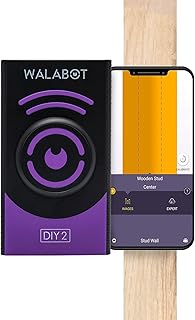
A wall imaging scanner that shows studs, pipes and wires before drilling into drywall. It is meant for drywall, not concrete, and its range is short.
 Popular Pick
A larger multi-sensor stud finder that maps each stud edge to edge and flags live wire. It is a plastic hand tool with a push button, and the listing gives no battery details.

A phone-based wall scanner for Android owners who want to see studs, pipes and cables before drilling. It will not work with any iPhone, iPad or tablet, so check your phone first.

A multi-material wall scanner that finds stud centers, metal, copper pipe and live wiring, with a clear marking ring for transferring hits. Detection depth is not stated, so check it before relying on it in thick walls.

A multi-sensor stud finder that shows each stud edge to edge and detects wood and metal. The listing does not say what batteries it takes.
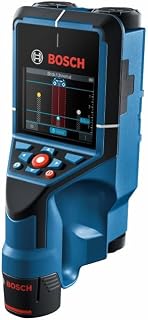
A strong fit for electricians and remodelers who need to see what is behind drywall or concrete before drilling. It is a full inspection tool on a battery platform, more than a quick stud check calls for.

A straightforward edge finder that marks wood and metal stud edges with light, sound and a projected spot. The listing describes no live wire detection, so it is a stud tool and nothing more.

A multi-sensor stud scanner that flags wood, metal and live AC wire, in a compact plastic body. The listing does not say what batteries it uses or what is in the box.

A stud finder that points to the center of a stud with LED arrows and a tone, rather than only to an edge. Its shallow detection depth rules out thick wall coverings.

A multi-mode stud finder that maps each stud and flags metal and live wire. Its battery is not included, and the wire alerts are supplemental.

A strong choice for older homes and layered walls where edge-only finders struggle, since it maps the full stud width. It is bulky for a pocket, and the listing says nothing about live wire detection.

A battery free magnetic ball that finds studs by locking onto drywall screws and nails. It locates fasteners rather than wood, so walls with sparse screws take more searching.

A multi-sensor stud finder that shows the full width and center of studs without calibration. It needs standard alkaline AAA batteries, not rechargeables, and they are not included.

A multi-mode stud finder that separates wood studs from pipes and brackets and flags live wiring before you drill. Scan depth, battery type and weight are not listed, so wall thickness limits are unknown.

A small magnetic stud finder for locating studs during remodeling and DIY work, with no electronics to run. The listing gives no detection depth or sensing range.

A single CRAFTSMAN stud sensor with a full lifetime warranty. The specs carry little detail, so scan depth and power source need checking elsewhere.

A battery-free magnetic stud finder in plastic with encapsulated magnets. The listing gives no detection depth or surface range beyond drywall and wood.

A battery-powered stud finder in the onion color with little spec data beyond weight and battery type. The box holds only the unit.

A battery-operated stud finder wall scanner in the banana color, listed with weight, battery type and little else. Detection depth is missing.

A multi-mode stud finder that also scans for metal and live wire, with an LCD and a beeping alert. Whether the battery ships in the box is unclear from the listing.

A multi-mode wall scanner with a graphical display and audio alerts, supplied with its battery and a pouch. Scan depth and accuracy figures are not listed.

A battery-powered wall scanner for studs, joists and hidden hazards before drilling or hanging. The listing gives no scan depth or accuracy figure.

A small battery powered stud finder with LED and beep alerts for wood studs and metal. Scan depth is only given as a wall thickness in the title.
As an Amazon Associate I earn from qualifying purchases.
Walabot DIY 2 Visual Stud FinderModel DIY 2Franklin Sensors ProSensor M210 Stud FinderModel ProSensor M210Walabot DIY In-Wall Imager for AndroidFranklin Sensors ProSensor 710+ Stud FinderModel ProSensor 710+Franklin Sensors ProSensor M150/X990 Stud FinderModel ProSensor M150/X990DEWALT DW0100 Stud FinderModel DW0100Rack-A-Tiers Stud Ball Magnetic Stud FinderFranklin Sensors ProSensor M70 Stud FinderModel ProSensor M70These 8 stud finders are the most searched brands and models among the established products in this category (monthly searches for each brand and model); on a tie, the one with more owner ratings ranks first. Product data comes from public Amazon listings (updated 2 days ago). We do not test products ourselves.
Franklin Sensors, Zircon, CH Hanson, The StudBuddy, Jaxwq lead this category among the 19 brands that passed our curation checks.
A listing appears only when it has a recorded price, a minimum customer rating, and enough ratings or monthly sales. Generic and unbranded listings are left out, while every real brand stays, including brands sold only on Amazon. The ones that pass are ordered by how many people search for that brand and model each month; review counts only break ties.
Magnetic stud finders locate metal fasteners that can indicate framing, while electronic models sense changes behind the wall and may indicate stud edges, centers or a wider view of concealed objects. Start by deciding whether locating a likely stud line is enough for your fixing job, or whether you need help mapping its edges before placing a bracket.
For an occasional fixing in plasterboard, a magnetic finder offers a battery-free approach, but isolated metal hits need interpretation: following a vertical line of fasteners gives more useful evidence than finding a single screw. An electronic finder can make repeated layout work easier by showing changes as you sweep, although wall construction and thickness affect detection. For either approach, confirm suitability for your wall covering; plaster over lath, tile and metal-backed finishes can complicate the result. If you expect to scan overhead or across a large area, compare the listed weight with tools you already find comfortable to hold against a wall. Among the 18 products that list item weight, most fall between 0.1 and 0.9 pounds, and 0.5 pounds is typical. Weight cannot tell you whether the grip lets you keep the sensing face flat while moving it.
With electronic models, decide how you want to transfer the result to the wall. To estimate a stud’s center with an edge indicator, locate both edges and mark halfway between them; a center indicator identifies that position directly. A marking notch can help align your pencil mark. Calibration is another practical distinction: some models require a particular starting position or procedure, so compare the manual’s scanning sequence with the space available around your intended fixing. If you need to locate concealed metal, check for an explicit metal-detection capability, but remember that a signal may come from a fastener in a wooden stud.
Before buying a model with live-wire detection, read its stated limitations: an absent warning is not proof that a drilling point is clear of wiring or pipes. Phone-linked scanners need explicit compatibility with your handset and operating system, plus any required connection accessories; check whether those are supplied or sold separately. For powered finders, confirm the battery format or charging method and whether the required batteries or charger are included.
How we list products: every listing here has a recorded price, a minimum customer rating and enough ratings or monthly sales. Generic and unbranded listings are left out; every real brand stays, including brands sold only on Amazon. Products are ordered by monthly searches for their brand and model on every page.Editorial policy